
DUSHANBE 10.02.2018

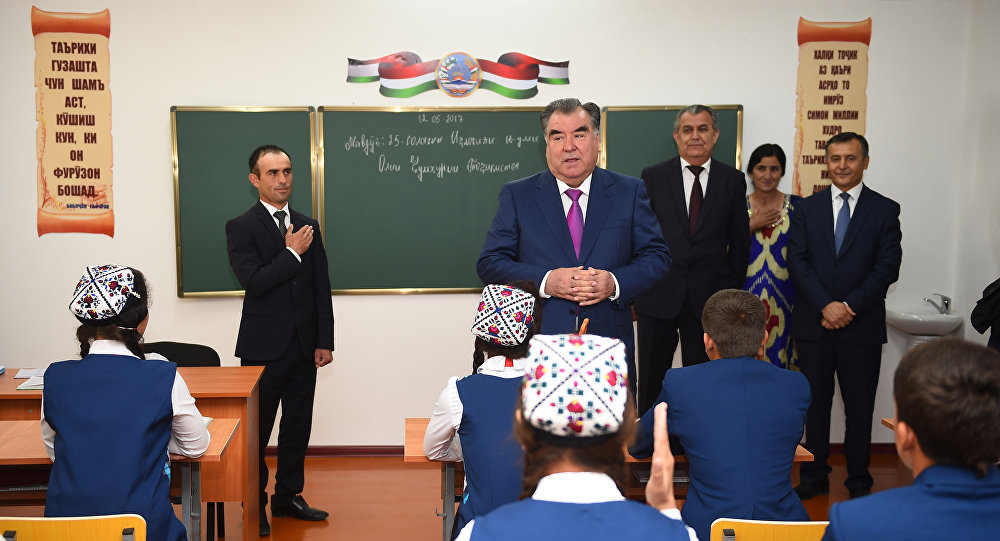 Education in Tajikistan consists of four years of primary school followed by two stages of secondary school (lasting five and two years, respectively). Attendance at school is mandatory from age seven to seventeen. In accordance with the Law on Higher Education and Professional Postgraduate Education the country provides for the following levels of higher education:
Some higher education institutions still apply an old system by providing specialists degree (darajai mutakhassis) where upon graduation a specialist diploma is awarded, which is equivalently recognized as a master degree by Higher Education and Professional Postgraduate Education of Tajikistan. On the other hand, some higher education institutions award Bachelor degrees after four years of studying. Thus those who do not have a Bachelor degree in a specialty cannot start a Master degree. Tajik is the main language of instruction through secondary school, but in 2003 Russian was restored as a mandatory second language.
According to historical and archaeological research of the ancestors of the Tajik people (for details, see. The history of Tajikistan), the first school (dabistany and dabiristany) were more than three thousand years ago. Enormous influence on the Tajik educational philosophy has Aryan culture and religion of Zoroastrianism. During this period, affirmed the unity of training and education, formed institutions of education and the profession of teacher and student. The ancient Greek writer Xenophon (445-355 gg. BC. E.) In his historical novel "Cyropaedia" ("Education of Cyrus") describes in detail the formulation of education and training of children in the "Persians" that is, the Iranian peoples.
While the official literacy rate in Tajikistan is 98%, the poor quality of education since 1991 has reduced the skill level of younger people. Although education is compulsory, many children fail to attend because of economic needs and security concerns in some regions. In 2001, pre-primary enrollment was less than 6% of eligible children.
In 2005 the total government expenditure on education was about US$80 million, or 15.9% of the national budget. The figure was scheduled to rise to US$108 million (17.3% of the budget) in 2006. A presidential program raised the salaries of teachers by 25% in 2005.
Some private schools and colleges have appeared in urban centers, and Russian and Uzbek schools exist. 33 institutions of higher learning were operating in 2003 when a constitutional amendment, however, abolished free higher education. That year, total enrollment was 96,600.